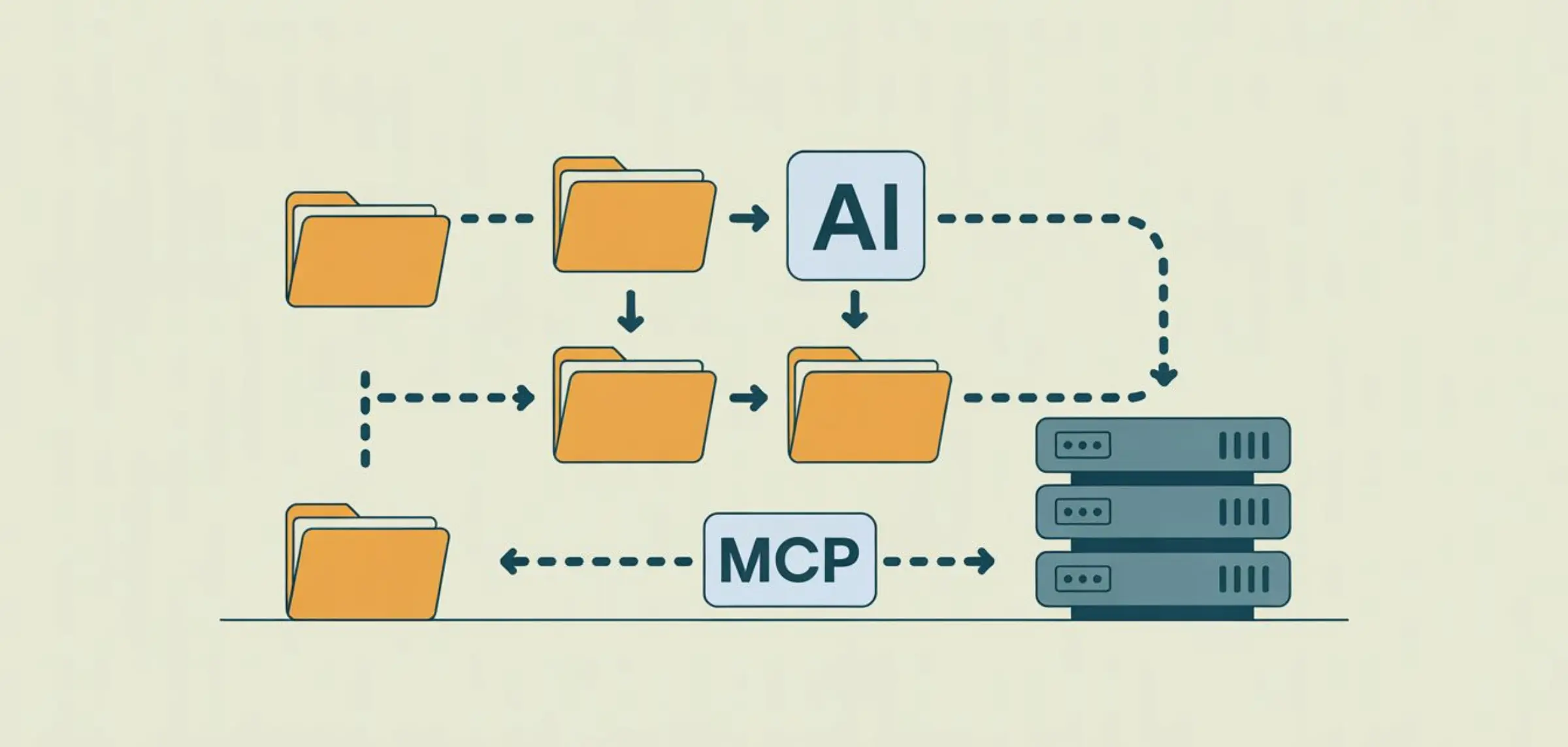
Both skills and MCP servers extend what AI agents can do. Both use open standards. Both are supported by major platforms. And both keep showing up in the same conversations. But they solve VERY different problems. Skills teach your AI agent HOW to do something well. MCP servers give your AI agent ACCESS to external tools and data. That one-sentence distinction is the key to everything else in this guide.
The Simple Explanation
Here's the simplest analogy I can give you:
A skill is a textbook. An MCP server is a key to a building.
The textbook teaches you how to do something — the theory, the steps, the best practices. But it can't open any doors for you.
The key gets you into the building — access to rooms, tools, and resources inside. But it doesn't teach you what to do once you're in.
You need both to be effective.
Now let's make this concrete.
Say you want your AI agent to help manage your Stripe payments.
The Stripe MCP server gives Claude access to your Stripe account. It can read transactions, view customer data, check subscription statuses, and pull invoices. That's the key — it opens the door to your financial data.
A finance analysis skill teaches Claude HOW to analyze that data effectively. Which metrics matter. How to spot anomalies. What format your CFO actually wants reports in. That's the textbook — it provides the expertise.
Without the MCP server, Claude can't see your data. Without the skill, Claude doesn't know what to do with it.
Together? Your AI agent becomes a genuinely useful financial analyst.
Side-by-Side Comparison
Here's how skills and MCP servers compare across every important dimension:
| Dimension | Skills | MCP Servers |
|---|---|---|
| What they do | Teach your agent how to perform tasks well | Give your agent access to external tools and data |
| Format | Markdown file (SKILL.md) | Running service (local process or remote API) |
| How they work | Claude reads instructions before completing a task | Claude sends requests and receives data through a protocol |
| Setup complexity | Copy a file to a folder | Install and configure a server (may need API keys) |
| Runtime | No runtime — just text Claude reads | Active process that handles requests |
| Network access | None — skills are pure text | Yes — connects to external APIs and services |
| Security model | Low risk — it's just instructions | Higher risk — requires credentials, network access |
| Open standard | SKILL.md (Apache 2.0, Dec 2025) | MCP (Linux Foundation, Nov 2024) |
| Ecosystem size | 69,849+ on skills.sh | 32,177+ on MCPHub |
| Platform support | 18+ AI agent platforms | 521+ MCP clients |
| Cost | Free (almost all open source) | Free (mostly), some require paid API access |
| Example | react-best-practices — teaches React patterns | GitHub MCP — accesses your repos and issues |
The technical difference comes down to this:
A skill is static knowledge. It's a document Claude reads. It doesn't run code, make API calls, or connect to anything. It just makes Claude smarter about a specific task.
An MCP server is a live service. It's a running process that Claude communicates with using JSON-RPC 2.0 over stdio (local) or Streamable HTTP (remote). It can read data, write data, and perform actions in external systems.
Skills Explained: Teaching Your Agent Expertise
A skill is a SKILL.md file — plain Markdown with optional YAML frontmatter — that contains instructions, examples, and rules for a specific task.
Here's what happens when you use a skill:
- Your agent scans available skills at startup (reading just the name and description — about 50-100 tokens per skill)
- When you make a request, the agent picks the relevant skill based on your task
- The full SKILL.md content loads into the agent's context
- The agent follows those instructions while completing your task
That's it. No network calls. No running processes. No credentials needed.
What Makes Skills Powerful
The power of skills comes from specificity.
Without a skill, asking Claude to "create a Word document" gives you a generic result. With Anthropic's docx skill installed, Claude knows the specific library calls, formatting rules, and edge cases that produce production-quality output.
The Skills Ecosystem Today
- 69,849+ skills indexed on skills.sh
- 72,000 GitHub stars on Anthropic's official skills repo
- 271,400 installs for the most popular skill (find-skills by Vercel)
- 18+ AI agent platforms support the same SKILL.md format
MCP Servers Explained: Giving Your Agent Access
MCP (Model Context Protocol) is a communication protocol that lets AI agents interact with external tools and services. An MCP server is a program that implements this protocol and exposes specific capabilities.
Here's what happens when you use an MCP server:
- The MCP server starts as a local process or remote service
- Your AI agent connects to it and discovers available tools
- When you make a request that needs external data, the agent sends a structured request to the MCP server
- The server processes the request and returns the results
- Your agent uses those results to complete your task
Unlike skills, MCP servers are active programs that run alongside your AI agent. They need to be installed, configured, and often require API keys or OAuth credentials.
What Makes MCP Servers Powerful
The power of MCP servers comes from connectivity.
Without an MCP server, your AI agent is limited to what's already in its training data and context window. With the right MCP server, your agent suddenly has real-time access to live data and the ability to take actions in external systems.
The MCP Ecosystem Today
- 32,177+ servers indexed on MCPHub
- 97 million monthly SDK downloads
- 28 of 30 major tech companies ship official MCP servers
- 521+ MCP clients support the protocol
- 75,300 GitHub stars on the official repo
When to Use Skills
Use a skill when you want to improve the quality of output for a specific type of task.
Here are the clearest indicators:
Your agent's output is technically correct but doesn't match your standards. Claude can write React code. But the react-best-practices skill makes that code follow modern patterns, use hooks correctly, and handle performance properly.
You keep correcting the same mistakes. If you're always telling Claude "no, use this format" — that's a skill waiting to be written.
You want consistent output across a team. Skills version-control with your repo. Everyone on the team gets the same AI behavior.
You don't need external data. If the task can be completed with just the input you provide and the right instructions, a skill is all you need.
When to Use MCP Servers
Use an MCP server when you need your agent to interact with external systems.
Here are the clearest indicators:
You need real-time data. Stock prices, database records, customer information — anything that changes and lives outside your conversation.
You need to take actions. Creating a GitHub issue, deploying to Cloudflare, sending a Slack message — these require an MCP server.
You need to read from a specific source. Your Figma designs, your Stripe transactions, your PostgreSQL database — MCP servers provide the access.
The task requires authentication. If you need to log into something to access data, that's an MCP server with proper credential management.
When to Use Both Together
Here's where things get really interesting.
The most powerful AI agent setups combine skills and MCP servers into unified workflows. The MCP server provides the data, and the skill provides the expertise for working with that data.
Here are five real combinations that work:
1. Frontend Development
frontend-design + react-best-practices (skills) paired with Figma MCP (server). Claude reads your actual Figma designs, translates them into React code that follows best practices, and makes design decisions that look intentional.
2. Database Management
supabase-postgres-best-practices (skill) paired with Supabase MCP (server). Claude queries your real database AND knows the best practices for writing optimized, secure queries.
3. Content Marketing
content-strategy + copywriting + seo-audit (skills) paired with Notion MCP + Sanity MCP (servers). Claude plans, writes, audits, and publishes.
4. Security Review
Trail of Bits' static-analysis + differential-review (skills) paired with GitHub MCP + Snyk MCP (servers). Claude reviews your actual code using expert methodology.
5. DevOps & Deployment
terraform-code-generation (skill) paired with AWS MCP + Cloudflare MCP (servers). Claude writes infrastructure code following best practices AND deploys it.
Real-World Examples
Let me walk you through three scenarios to make the distinction concrete.
Scenario 1: "Write me a React dashboard"
Skills only. You don't need external data — you need Claude to write great React code. Install: react-best-practices + frontend-design + shadcn-ui
Scenario 2: "Show me our open GitHub issues sorted by priority"
MCP server only. Claude doesn't need special expertise — it just needs to read your GitHub data. Install: GitHub MCP server
Scenario 3: "Review the PR for security vulnerabilities and leave comments"
Both together. Claude needs ACCESS to your GitHub PR (MCP server) and EXPERTISE in security review methodology (skill). Install: GitHub MCP server + Trail of Bits' static-analysis + differential-review
Neither the skill nor the MCP server alone could do this. Together, they create a workflow that genuinely replaces a manual security review.
The Decision Flowchart
Use this to figure out what you need for any given task:
Question 1: Does the task need data from an external system?
- No → You need skills only
- Yes → Go to Question 2
Question 2: Is the task straightforward (just fetching/displaying data)?
- Yes → You need an MCP server only
- No → Go to Question 3
Question 3: Does the task require specialized expertise to do well?
- Yes → You need both a skill and an MCP server
- No → You need an MCP server only
That's the entire decision framework. Three questions.
FAQ
Now It's Your Turn
Skills and MCP servers aren’t competitors. They’re complements. Skills make your AI agent smarter about specific tasks. MCP servers give your AI agent access to the tools and data it needs. The best workflows use both — and that’s exactly why we built AgenticSkills.io to curate both ecosystems together.
Browse All Skills